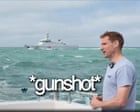
Conservative Politician Alleges Confrontation with French Naval Vessel
A prominent member of the Conservative Party has made serious allegations regarding a French navy Channel incident that occurred during a BBC media engagement. Chris Philp, serving as his party's spokesperson on home affairs matters, was participating in an interview approximately two nautical miles off the port city of Boulogne when the incident reportedly took place on Tuesday. The alleged French navy encounter has reignited debates about enforcement operations in the Channel and diplomatic tensions between the United Kingdom and France.
Details of the Alleged Shooting Incident
According to Philp's account, a French naval vessel identified as the Flamant approached the boat carrying the Conservative politician and the BBC crew. During this encounter, a French navy officer positioned at the rear of the warship discharged a handgun in the direction of the vessel, with approximately 17 rounds fired. Philp maintains that while the shots were discharged away from his immediate location, the incident represented an aggressive action designed to disrupt his media appearance.
Context of the Channel Small Boats Crisis
The timing of this alleged French navy Channel incident coincides with Philp's efforts to publicize concerns about irregular migration across the Channel. The Conservative spokesperson has been actively campaigning to draw attention to small boat crossings, which have become a contentious policy issue between London and Paris. Authorities in both nations have struggled to manage the flow of migrants attempting to reach British shores through increasingly dangerous maritime routes.
The small boats crisis has dominated political discourse in the United Kingdom for several years, with various governmental and opposition figures proposing different solutions to address the phenomenon. French authorities have similarly faced pressure to enhance border security and prevent departures from their coastline.
Allegations of Intentional Disruption
Philp's interpretation of the French navy's actions suggests an intentional effort to prevent him from continuing his media engagement regarding migration issues. The Conservative MP argues that the warship's approach and the firing of warning shots represented more than routine maritime operations. Instead, he characterizes the events as a deliberate attempt to silence his commentary on cross-Channel migration challenges.
This allegation raises questions about coordination between French maritime authorities and governmental officials who may seek to limit critical discussion of border enforcement. The French navy typically conducts regular patrols in Channel waters to maintain maritime security and monitor suspicious vessels engaged in smuggling operations.
International Implications and Political Response
The alleged French navy Channel incident carries significant diplomatic implications for UK-France relations. Relations between the two nations have experienced considerable strain in recent years over multiple issues, including post-Brexit trade arrangements, fishing rights, and border security cooperation. Maritime incidents, whether actual or perceived, can rapidly escalate tensions between neighboring countries with complex historical relationships.
Political observers note that such confrontations, if substantiated, could further complicate efforts to foster collaborative approaches to managing irregular migration. Effective solutions to the small boats crisis require coordinated action between British and French authorities, making diplomatic harmony essential for progress.
French Navy Operations in the Channel
The Flamant, the warship mentioned in Philp's account, operates within French territorial waters and international waters of the Channel as part of routine maritime patrol operations. French naval vessels regularly conduct surveillance and enforcement activities targeting suspected smuggling operations and vessels carrying migrants attempting unauthorized crossings. These operations represent standard maritime law enforcement procedures.
The presence of such vessels in Channel waters reflects the high-stakes environment surrounding irregular migration attempts. Boats engaged in people smuggling operations often employ dangerous tactics, traverse treacherous sea conditions, and operate outside official maritime channels. Naval authorities from both nations maintain active monitoring and enforcement presence to address these concerns.
Questions Surrounding the Incident
The alleged French navy incident raises multiple questions requiring clarification. Determining the circumstances that prompted the warship's proximity to Philp's vessel becomes crucial for understanding whether the encounter represented routine operations or deliberate intervention. The firing of handgun rounds, whether characterized as warning shots or otherwise, constitutes a serious escalation in any maritime interaction.
Additionally, whether French naval command authorized such actions or whether individual officers made independent decisions remains unclear. The absence of immediate official commentary from French authorities suggests either ongoing internal review procedures or reluctance to engage with the allegations directly.
Implications for Future Cross-Channel Operations
Should the allegations prove accurate, the French navy Channel incident could establish troubling precedents for future interactions between British politicians, media personnel, and French maritime authorities. Journalists and elected officials conducting legitimate reporting or advocacy work must be able to operate safely without fear of armed confrontation, regardless of their political positions on contentious issues.
The incident underscores the complexity of managing migration policy within democratic frameworks that value free expression and media independence. Balancing border security concerns against fundamental rights to speech and assembly presents ongoing challenges for policymakers on both sides of the Channel.