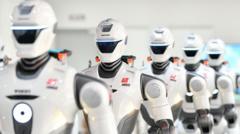
Trump Administration Takes Action on Chinese Humanoid Robot Technology
The Trump administration has announced a comprehensive restriction on the importation of new Chinese humanoid robots, marking a significant escalation in the ongoing technological competition between the United States and China. This decision reflects broader concerns about maintaining American dominance in the rapidly evolving field of robotics and artificial intelligence development.
Understanding the Global Robotics Race
The United States and China find themselves engaged in an intensifying competition to establish technological superiority in the worldwide robotics and artificial intelligence sectors. Both nations recognize the strategic importance of controlling cutting-edge robotic technology, which promises to reshape manufacturing, healthcare, defense, and numerous other industries. The rivalry between these two economic powerhouses has driven unprecedented innovation and investment in autonomous systems and advanced AI capabilities.
Strategic Implications of the Ban
By restricting imports of Chinese humanoid robots, the Trump administration aims to protect domestic technological advancement and prevent potential security vulnerabilities. Officials have expressed concerns that advanced robotics from foreign adversaries could compromise American industrial secrets or create dependencies on external technology sources. The ban represents a protectionist measure designed to strengthen the domestic robotics industry and encourage American companies to accelerate their own development programs.
Impact on the Technology Sector
The restriction on Chinese humanoid robots is expected to have far-reaching consequences across multiple industries. American robotics manufacturers and AI developers may benefit from reduced foreign competition, potentially allowing them to capture larger market shares and accelerate research initiatives. However, companies that rely on imported components or integrate Chinese robotic systems into their operations may face supply chain disruptions and increased production costs.
International Trade Tensions
This decision contributes to the escalating trade tensions between Washington and Beijing, adding another layer to their complex economic relationship. Both nations have implemented various measures targeting technology sectors, creating an increasingly fragmented global tech landscape. The restrictions on Chinese humanoid robots exemplify how geopolitical competition now extends into specialized fields of technological innovation.
Looking Forward in the AI Revolution
As the United States and China continue their pursuit of artificial intelligence leadership, policies like the humanoid robot ban will likely shape the trajectory of global tech development. The competition between these nations will determine which countries lead in robotics innovation, job creation within the sector, and ultimately, technological supremacy in the twenty-first century economy.


