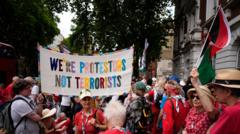
Supreme Court to Review Palestine Action Ban Decision
The United Kingdom's highest judicial authority has granted permission to proceed with a legal challenge regarding the Palestine Action ban imposed by the government under counterterrorism statutes. The co-founder of the activist organization has successfully obtained clearance from the Supreme Court to pursue an appeal against the proscription order that prohibits the group's operations.
This significant development marks an important moment in the ongoing dispute between the activist collective and British authorities. The Palestine Action ban was initially implemented as part of government efforts to enforce existing anti-terrorism measures against organizations deemed to pose security risks. The organization's leadership had contested the designation, arguing that the classification was unjustified and infringed upon legitimate protest activities.
Legal Challenge Against Government Proscription
The decision by the nation's apex court to permit the appeal demonstrates that the judicial body considers the case presents substantial legal questions warranting comprehensive examination. The Supreme Court's willingness to hear arguments about the Palestine Action ban suggests contentious issues surrounding the interpretation and application of counterterrorism statutes require clarification.
The co-founder's legal team has maintained that the proscription order exceeded governmental authority and failed to follow proper procedural safeguards. They contend that designating the group as a terrorist organization constitutes an overreach that restricts freedoms of assembly and expression guaranteed under British law and international human rights conventions.
Anti-Terrorism Legislation Under Scrutiny
The Palestine Action ban case has ignited broader debate regarding how extensively anti-terrorism legislation should be applied to protest movements and activist groups. Critics argue that authorities have invoked counterterrorism powers too expansively, potentially suppressing legitimate political discourse and civil disobedience rather than addressing genuine security threats.
Government officials defend the proscription as a necessary measure to prevent activities they characterize as disruptive and potentially dangerous. They maintain that the organization engaged in conduct that warranted classification under established legal frameworks designed to protect national security.
Implications for Future Cases
The Supreme Court's decision to review the Palestine Action ban carries implications extending beyond this specific organization. The ruling could establish important precedents regarding the standards and procedures that authorities must follow when implementing proscription orders against groups claiming to pursue legitimate advocacy work.
Legal analysts suggest that the court's findings may influence how similar cases are adjudicated in the future, potentially reshaping the balance between security measures and civil liberties protections in British law. The outcome could affect multiple organizations operating in contested political spaces.
Timeline and Procedural Steps
The permission granted by the Supreme Court initiates formal appeal procedures that will involve comprehensive legal arguments from both the applicant's representatives and government counsel. The judicial process will examine whether the initial proscription decision complied with applicable legal standards and constitutional protections.
Observers of the Palestine Action ban dispute anticipate that the court proceedings will require several months to complete, as the Supreme Court typically schedules oral arguments well in advance and deliberates thoroughly before issuing written judgments.
Broader Context of Activist Restrictions
This case occurs within a larger context of evolving regulations governing protest activities and advocacy organizations throughout the United Kingdom. Various groups have faced increased scrutiny and legal challenges regarding their operational methods and messaging, raising questions about the appropriate scope of governmental oversight.
The Palestine Action ban represents a notable instance where judicial intervention has been sought to contest executive decisions regarding group designations. Such legal battles contribute to ongoing discussions about democratic principles, national security concerns, and the protection of dissenting voices in contemporary society.