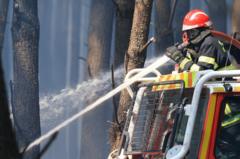
France Wildfire Intensifies as Communities Stand Their Ground
A major France wildfire continues to ravage the Gironde region, with firefighting teams confronting unprecedented challenges as temperatures soar beyond 40 degrees Celsius. Despite official evacuation orders, several residents have chosen to remain in affected areas, determined to defend their properties and ancestral lands from the encroaching flames. This decision underscores the deep emotional connection locals maintain with their homes and the surrounding forests that have sustained their families for generations.
Extreme Heat Complicates Firefighting Efforts
The France wildfire emergency has reached critical proportions as heat levels make traditional firefighting operations increasingly hazardous. Operating in temperatures exceeding 40C, emergency response teams face significant physical and logistical challenges. Equipment performance degrades in extreme heat, water supplies evaporate more rapidly, and personnel must work in dangerously hot conditions that heighten the risk of heat-related illnesses and injuries. Despite these obstacles, firefighters persist in their mission to contain the spreading flames and protect vulnerable communities.
Local Resistance to Evacuation Orders
Many residents in the Gironde region have openly defied evacuation mandates, stating that their homes and forests represent irreplaceable parts of their identity and heritage. These individuals view their decision to stay as a necessary act of protection rather than stubbornness. For generations, families have maintained deep roots in these forested areas, managing their properties with care and passing down knowledge about forest management and preservation. The prospect of abandoning these lands to fire conflicts fundamentally with their values and sense of stewardship.
Community Perspectives on Home and Heritage
Interviews with residents reveal profound attachments to their properties and the natural environment. Many locals express that leaving their homes undefended during a France wildfire would mean losing not just structures but vital repositories of family history and cultural continuity. Some have taken personal measures to protect their properties, clearing brush, reinforcing structures, and maintaining vigilance against approaching flames. This grassroots approach to defense, while potentially risky, reflects the determination of communities unwilling to surrender their ancestral territories.
Emergency Response and Safety Concerns
Authorities face a delicate situation balancing respect for residents' autonomy with urgent safety imperatives. Evacuation orders exist specifically to prevent loss of life, yet forcing compliance becomes problematic when residents possess legitimate concerns about property protection and historical continuity. Emergency services must maintain presence in evacuation zones both to assist those who require help and to manage interactions with those who choose to remain. This dual responsibility strains resources already stretched by the France wildfire's scale and intensity.
Impact on Firefighting Resources
When residents remain in evacuation zones, first responders must allocate additional resources to ensure their safety, potentially diverting attention from broader fire containment efforts. Firefighters must balance fighting the Gironde region wildfire with monitoring occupied properties and being prepared for rapid evacuations if situations deteriorate unexpectedly. This complexity represents one of many challenges emergency teams navigate during large-scale disasters.
Environmental and Economic Implications
The France wildfire threatens not only residential areas but also vast tracts of forest that hold ecological and economic significance. The region's forestry industry, tourism sector, and natural habitat face potentially devastating consequences. Beyond immediate destruction, environmental recovery takes years, affecting wildlife populations, water quality, and landscape restoration efforts. Communities understand that protecting these forests protects their economic futures and the ecosystems upon which local biodiversity depends.
Climate Change and Wildfire Patterns
Experts attribute increasingly severe wildfire seasons partly to climate change effects intensifying heat waves and extending dry periods. The Gironde region has experienced multiple significant fires in recent years, suggesting a troubling pattern of escalating fire seasons. This context explains why residents feel urgency about defending their homes—each successive fire season presents mounting risks that conventional emergency response systems struggle to manage effectively.
Looking Forward: Coordination and Community Safety
As the France wildfire continues, dialogue between authorities and residents becomes essential. Finding approaches that acknowledge legitimate concerns while prioritizing human safety requires transparency and mutual respect. Future wildfire management may require incorporating community knowledge and local expertise alongside professional emergency response protocols. The dedication residents demonstrate toward protecting their homes, when channeled constructively, could contribute to more effective disaster response strategies that honor both safety requirements and community agency.