Iran's Strategic Calculation in Limited Conflict
Iran US conflict strategy has become increasingly complex as Tehran reassesses its approach to decades-long tensions with Washington. Rather than pursuing comprehensive peace agreements, Iranian leadership may perceive that carefully managed military confrontations could serve its regional and domestic interests more effectively than peaceful normalization.
This strategic perspective reflects a calculated approach where Iran believes it can maintain sustained pressure on American interests throughout the Middle East while simultaneously avoiding the catastrophic consequences of total war. The distinction between limited military tension and comprehensive conflict resolution represents a fundamental shift in how Tehran evaluates its options against Washington.
The Advantages of Controlled Pressure
Maintaining limited military tension offers Iran several distinct advantages in its broader regional competition. First, it allows Tehran to demonstrate resolve and capability to its domestic audience without the economic devastation that would accompany full-scale warfare. This approach helps consolidate government legitimacy among nationalist constituencies who demand resistance against American influence.
Second, limited conflict enables Iran to impose costs on US military assets and allied nations in the region without triggering the overwhelming American military response that would follow a direct attack on American territory. This measured escalation strategy protects Iran's critical infrastructure while maintaining deterrent credibility against perceived enemies.
Regional Balance of Power
For Iran, controlled military tension reinforces its position as a serious regional power capable of influencing outcomes in Iraq, Syria, Yemen, and Palestine. These proxy networks and allied militias allow Tehran to project power without direct confrontation, maintaining strategic depth that purely peaceful coexistence might eliminate.
Domestic Political Dimensions
Iranian domestic politics significantly influence this strategic preference. Hardline factions within Tehran's leadership derive political legitimacy from resistance against American imperialism. Complete peace with the US would undermine these groups' foundational narratives and potentially weaken their institutional power within Iran's complex governance structure.
Economic sanctions relief through peace agreements might paradoxically strengthen reformist elements that favor greater market liberalization and reduced military spending. Revolutionary Guard commanders and parallel institutions benefit from ongoing tension, which justifies continued military budgets and autonomous operations.
Avoiding Catastrophic Escalation
Iran's leadership recognizes that unlimited military escalation would almost certainly result in defeat against American technological and military superiority. The calculation therefore centers on finding an equilibrium point where Iran maintains pressure without crossing thresholds that would provoke overwhelming retaliation.
This strategy relies on several tactical assumptions. First, that the US government prioritizes avoiding large-scale Middle Eastern conflicts due to domestic political constraints and military commitments elsewhere. Second, that American reluctance to absorb high casualties creates space for Iranian operations that impose costs without threatening core American territory.
Nuclear Dimension
Iran's nuclear program adds complexity to this strategic equation. A controlled conflict posture allows Iran to advance nuclear capabilities while maintaining plausible deniability about its ultimate intentions, whereas peace negotiations might require transparency measures inconsistent with Tehran's weapons development objectives.
Regional Alliance Networks
Through proxies and allied movements, Iran has constructed a network extending from the Persian Gulf through Iraq, Syria, and Lebanon to Palestinian territories. This interconnected system of influence provides leverage that pure bilateral peace with Washington would not necessarily preserve. Limited military tension helps maintain these alliance structures and demonstrates continued commitment to supporting anti-American actors.
The Houthi movement in Yemen, various Iraqi militia factions, Hezbollah in Lebanon, and Palestinian armed groups all derive legitimacy partly from Iran's willingness to sustain confrontation with American interests. A dramatic shift toward peaceful accommodation would immediately weaken Tehran's credibility among these partners.
Economic Considerations
While comprehensive sanctions relief through peace would benefit certain Iranian economic sectors, it would simultaneously expose Iran to greater foreign competition and potential political reform pressures. The current sanctions regime, paradoxically, protects certain Iranian industries from international competition and justifies continued government control over key economic sectors.
Risk Management Framework
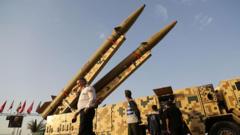
Iran's apparent preference for limited military tension reflects sophisticated risk calculation rather than recklessness. Tehran has invested in asymmetric capabilities—drone technology, missile systems, cyber operations, and proxy forces—specifically designed to impose costs on adversaries without inviting disproportionate retaliation. This approach maximizes strategic leverage while minimizing existential risk.
The strategy essentially positions Iran as a regional problem requiring American attention and resources without becoming so threatening as to justify preemptive military action. This middle ground allows Tehran to maintain its revolutionary posture while preserving state survival—the paramount concern for any government.
Conclusion: Strategic Preferences Over Genuine Peace
Iran US conflict strategy ultimately reflects calculations that limited, controlled military confrontation better serves Tehran's institutional interests than comprehensive peace would provide. This position transcends simple belligerence; rather, it represents a strategic preference embedded in how Iran's leadership evaluates power, legitimacy, and regional influence. Understanding this perspective remains essential for comprehending Middle Eastern geopolitics and the persistent tensions that define US-Iran relations.