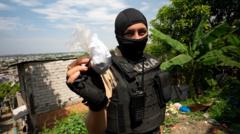
Ecuador's Cocaine Superhighway: A Growing Crisis
The cocaine superhighway stretching from Ecuador to Europe represents one of the most significant challenges facing law enforcement in Latin America today. As criminal organizations expand their operations across continents, Ecuador's police forces find themselves on the frontlines of an intensifying battle against narcotics trafficking and organized crime.
Understanding the Cocaine Superhighway Network
The cocaine superhighway is not a single route but rather a complex network of trafficking corridors that moves illegal drugs from production areas in Ecuador through various international pathways toward European markets. These smuggling operations have grown exponentially in recent years, with gangs employing increasingly sophisticated methods to evade detection.
The infrastructure supporting this cocaine superhighway includes maritime routes, air corridors, and overland passages that span multiple countries. Ecuador's strategic location on South America's Pacific coast makes it a critical junction point for international drug trafficking operations.
Law Enforcement Operations and Frontline Work
Ecuador's police department has intensified its patrol operations in regions known for high drug trafficking activity. Officers work around the clock to intercept shipments, dismantle production facilities, and apprehend individuals involved in the cocaine superhighway operations.
Patrol units operate in challenging environments where gang presence is substantial. Police personnel undertake dangerous missions, conducting raids, surveillance operations, and intelligence gathering to disrupt the flow of narcotics. These frontline efforts represent the daily commitment of law enforcement to combat the escalating crisis.
Challenges Faced by Police Forces
The cocaine superhighway operations present multiple obstacles to effective law enforcement. Gang members maintain territorial control in certain regions, making police operations exceptionally hazardous. Corruption, limited resources, and the scale of trafficking activities compound these difficulties.
Violence associated with the drug trade has escalated dramatically. Gang rivalries over control of cocaine superhighway routes result in confrontations that extend beyond police interactions, affecting civilian populations throughout affected communities.
Criminal Organization Structures
Gangs involved in cocaine superhighway trafficking operate with military-style hierarchies and sophisticated coordination. These organizations manage various stages of the supply chain, from production and packaging to transportation and distribution networks.
International cartels maintain significant influence over Ecuador's drug market, directing operations and ensuring consistent cocaine superhighway flows toward European destinations. Local gangs frequently operate as subsidiary organizations under cartel oversight.
Recruitment and Operational Methods
Criminal organizations actively recruit members by offering lucrative payments and promising employment opportunities. Young individuals from impoverished communities often become drawn into cocaine superhighway operations through economic desperation.
Gangs employ lookout systems, coded communication networks, and mobile operations to maintain functionality despite police pressure. Technology plays an increasingly important role in coordinating cocaine superhighway shipments and managing criminal activities.
Impact on Ecuadorian Communities
The cocaine superhighway crisis extends far beyond drug trafficking statistics. Communities throughout Ecuador experience increased violence, instability, and social disruption as gangs battle for territorial control and resources.
Prison systems have become overwhelmed with drug-related offenses, straining institutional capacity. The cocaine superhighway economy distorts local markets and creates dependency relationships within vulnerable populations.
International Cooperation and Response Strategies
Addressing the cocaine superhighway challenge requires coordinated international efforts. Ecuador's government works with foreign law enforcement agencies, particularly those in Europe and North America, to track shipments and coordinate interdiction efforts.
Intelligence sharing between nations has become essential for disrupting cocaine superhighway operations at various points along trafficking routes. Joint task forces operate to identify major trafficking organizations and their key operatives.
Technology and Innovation in Enforcement
Modern police operations employ advanced surveillance technologies, forensic analysis, and data-sharing platforms to combat the cocaine superhighway network. Interagency coordination centers collect and analyze intelligence to identify patterns and anticipate trafficking movements.
Looking Forward: Strategies for Control
Future approaches to managing the cocaine superhighway crisis will require sustained commitment to enforcement while addressing root causes of gang recruitment and drug production. Community engagement programs and economic development initiatives may help reduce vulnerability to trafficking organizations.
The battle against the cocaine superhighway represents a long-term commitment requiring resources, international cooperation, and innovative strategies. Ecuador's police continue their critical work despite overwhelming challenges, working to disrupt this major trafficking network and protect communities from the violence and instability associated with narcotics crime.