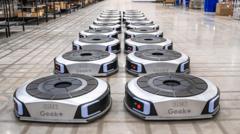
Chinese Robotics Transforming UK Retail Landscape
The United Kingdom's retail industry is undergoing a significant transformation driven by Chinese robotics companies addressing critical workforce and productivity challenges. Chinese robotics firms are capitalizing on Britain's well-documented productivity growth stagnation and persistent labour shortages by introducing automated solutions specifically designed for retail environments. This technological shift represents a major pivot in how British retailers approach operational efficiency and staffing constraints.
Understanding the UK's Productivity Crisis
Britain faces mounting challenges with productivity growth remaining consistently weak compared to its international counterparts. The retail sector, one of the nation's largest employers, has been particularly vulnerable to these productivity pressures. Coupled with ongoing labour shortage issues that have intensified in recent years, UK retailers face operational inefficiencies that directly impact profitability and service quality. These economic headwinds have created an attractive market for innovative automation solutions originating from Asia's technology leaders.
How Chinese Robotics Address Industry Challenges
Chinese robotics manufacturers have developed sophisticated automation systems tailored specifically for retail operations. These solutions target warehouse management, inventory processing, and customer service functions that traditionally relied heavily on manual labour. The robotic systems offer retailers the ability to maintain operations while reducing dependency on human workers in roles where labour availability remains constrained. Chinese robotics innovations provide cost-effective alternatives to expensive workforce recruitment and training programmes.
Warehouse and Inventory Automation
Advanced robotic systems from Chinese manufacturers handle complex warehouse operations with remarkable precision. These technologies manage inventory sorting, stock rotation, and package handling at volumes significantly exceeding traditional manual methods. UK retailers leveraging Chinese robotics in their warehouses report improved accuracy, reduced processing times, and lower operational costs. The automation extends throughout supply chain functions, from goods reception to dispatch centres.
Customer-Facing Robotic Solutions
Beyond warehouse applications, Chinese robotics companies supply retail stores with customer service robots. These intelligent machines provide information, assist with product location, and manage basic customer inquiries, reducing pressure on stretched retail staff. The technology demonstrates particular value in large shopping centres and retail chains where foot traffic volumes create seasonal staffing challenges.
Economic Drivers Behind This Trend
Britain's economic situation creates ideal conditions for robotic adoption. The combination of productivity stagnation and labour market tightness means retailers must seek alternatives to traditional staffing models. Chinese robotics manufacturers, benefiting from established supply chains and competitive manufacturing costs, offer solutions that are financially accessible to mid-sized and smaller retailers who might otherwise struggle with automation investments. This democratization of robotic technology expands adoption beyond major corporate chains.
Impact on the UK Retail Sector
The increasing prevalence of Chinese robotics in British retail generates substantial industry-wide implications. Retailers implementing these solutions report enhanced operational consistency and improved ability to meet customer demand during peak trading periods. However, the technological shift simultaneously raises questions about employment displacement and workforce retraining requirements across the retail industry. British retail workers face an evolving landscape where job responsibilities increasingly focus on customer experience rather than manual processing tasks.
Competitive Landscape and Market Growth
Multiple Chinese robotics firms compete aggressively for UK retail market share. Companies from Shanghai, Shenzhen, and other manufacturing hubs actively market solutions targeting British retailers' specific operational pain points. The market expansion reflects Chinese technology companies' broader strategy of penetrating Western markets with sophisticated automation products. As more retailers adopt these solutions, network effects create additional pressure on competitors to modernize their own operations.
Challenges and Considerations
Despite apparent advantages, UK retailers face genuine challenges in implementing Chinese robotics solutions. Integration with existing systems requires technical expertise and sometimes substantial infrastructure modifications. Staff training programmes must prepare employees for working alongside robotic systems. Additionally, questions surrounding supply chain resilience, data security, and maintenance support from international manufacturers require careful consideration before investment decisions.
Future Outlook for British Retail
The trajectory suggests continued growth in Chinese robotics adoption throughout UK retail. As productivity demands intensify and labour availability remains constrained, more retailers will likely evaluate automation options. British companies developing competing robotic solutions face increasing pressure to innovate and differentiate their offerings. The transformation represents a fundamental shift in how the retail sector approaches operational challenges and competitive positioning in an increasingly automated marketplace.


